Monday, February 23, 2015

Artisan Toolkits: Alchemist


Weight: 20 pounds (9.07 Kilograms)
Cost: 50 gold

Contents
Alchemist’s Book
Crucible
Mortar and Pestle
Retort
Adjustable Stands
Show Globe
Case

The Alchemist’s toolkit can go one of two way: it can either be a fragile, highly precise setup that is not intended for travel; or it can be a functional, inaccurate, and sturdy traveling kit designed to compensate for the roughness of life in the wilds. Since the former does not apply to our adventurous players I will put it aside and instead focus on the traveling kit. The kit will include eight items: Alchemist’s Book, Crucible, Mortar and Pestle, Retort, Stands, Show Globe, and a Case. These items represent the bare necessitates required for performing the trade but do not represent all that may be required in order to successfully create some alchemical processes.

For the Alchemist a book filled with all the needful knowledge of the profession is just as necessary as a Wizard’s spell book. Inside it will contain the procedures for distilling certain chemicals, elements (such as are known in your gaming worlds), the manufacturing of chemical medicines, the correct way to set up an alchemist’s laboratory, and how to manufacture things such as a cupellation furnace for the refining of certain metals. Without the book an alchemist can become lost when dealing with processes that aren’t common in their day-to-day working life, which can result in disastrous consequences that range from blowing up the lab to accidentally poisoning someone when you’re trying to prepare a medicine for them. For an adventurer this can present a substantial problem as there are no regular routines to reinforce the ways of alchemy in their minds so the book is incredibly important.

Medieval Book


In my campaigns I intend to treat the book as being about the size of a hardback dictionary. This means that the book will be roughly 2 1/2” thick, 12” long, and 9” wide. The paper inside will be hand pressed which means that it will be thicker than modern paper and slightly heavier as a result. The ink on the pages should be fairly weather resistant so long as it isn’t left out in the rain or set on fire. Weight wise the book should be between five and six pounds depending on if you have a metal lock on it and how much decorative junk you’d like on the outside of it. If you’d like a title for the book I suggest calling Llull’s Transactione vel Alchimisticam (Latin for alchemical treatise). It’s got a nice ring to it and is loosely connected with Ramon Llull who actually wrote about such things.

The Retort is essentially a one piece pot still that is designed for boiling off liquids. Typically in laboratory settings you see them as glass vessels; but for a traveling alchemist who is more than likely to go hunting monsters at some point than sitting comfortably in a lab the very idea of taking glass anything along for the trip is madness. Instead it will need to be metal, and copper is the best choice. It conducts heat well, is relatively lightweight, and can be reasonably repaired without too much trouble. To be useful for the travelling kit it needs to be about the size of a medium sized Mason Jar. Which means that it should take up about a 4” square of space in the kit and weigh between a half pound and whole pound depending on if you want to make it larger.

copper retort

A crucible is nothing more than a container that can withstand high temperatures without losing its shape, and for alchemists trying to combine chemicals it’s perfect. Traditionally crucibles were made from clay and though that makes them fragile the case should be able to keep them relatively safe if they’re packaged correctly so on this piece we’ll make do with their fragile nature. For the size it needs to be no bigger than a coffee cup. That will keep its weight under half a pound which is perfect for us.

The Mortar and Pestle are used by alchemists to grind up ingredients into a fine powder or paste. Their importance for the alchemist (and for other toolkits) is hard to overstate. At the typical time period of most quasi-Medieval Dungeons & Dragons it would be relatively easy to find them made of marble, stone, wood, iron, steel, and brass. Other than wood, which should be used as a last resort since it is highly absorbent, most of these should be of similar weights due to the time and should take up the same volume of area that the crucible took up. For my purposes I will be using the stone crucible and will be setting the weight at 2 1/2 pounds.

Adjustable Stands are necessary for keeping the Retort at a set height and they can be simple things that collapse or are able to be taken apart and stored in a smaller area. Their weight is so small for each one that it’s easy to include a half dozen of them and not have to worry about raising the weight more than a half pound.
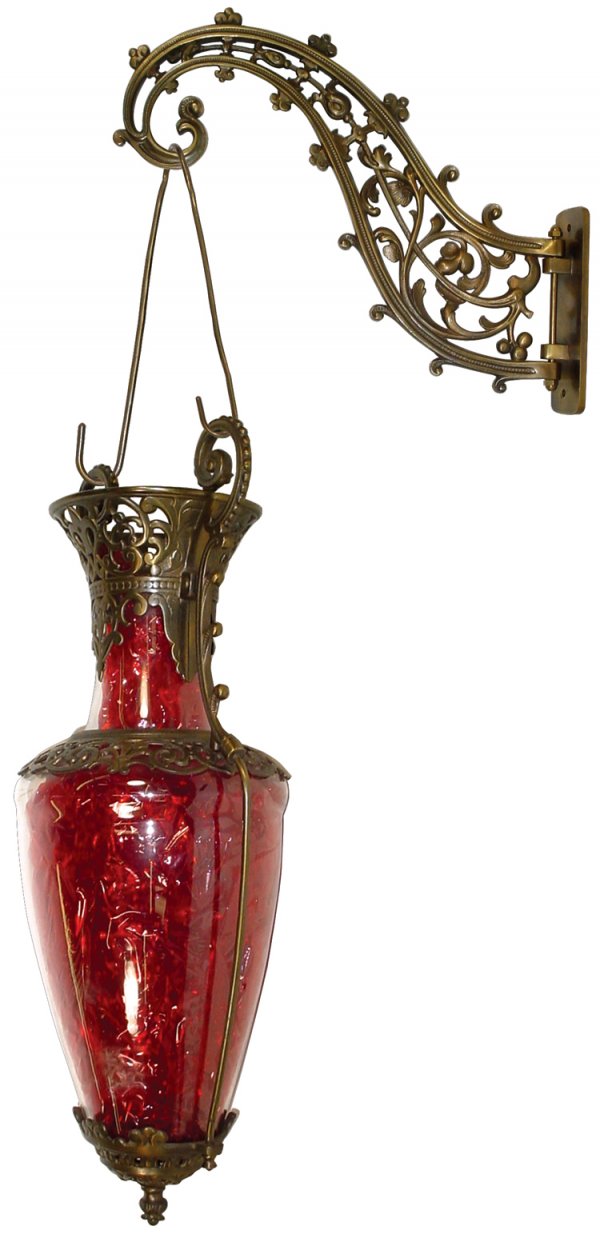
Alchemist Show Globe

The Show Globe is a symbol of the profession. Like the huge red dots on the side of liquor stores in South Carolina the Show Globes are designed for the illiterate to find you and know what you’re offering them. These globes are made of glass and can be of any color that fits your setting (though I’ve only ever seen them with a red color). They will be bound in chains so that they can hang from a staff or pole to show people that you’re open for business. The globe needs to be about the size of a soft ball and open on the top so that you can drop a candle into it to light it up. Due to its size and accouterments I’m placing the weight of this at a 2 pounds.

The case is a velvet lined, wooden box with small doors and straps to keep everything bound in place. Its edges are given extra support with steel fittings and the lock will be of a good quality. It will have similar styled handles with loops to help bind it to backpacks and pack animals. It is designed to be durable and as long as everything is placed properly it should be more than capable of protecting everything and keeping anything from breaking. I’m setting its weight at five pounds and worth every ounce of it for the protection it will provide everything.

Artisan Toolkit Series
Alchemist
Cobbler
Cook
Glassblower
Jeweler
Leatherworker
Mason
Painter
Potter
Smith
Surveyor
Tinker
Weaver
Woodcarver
Final

Artisan Toolkits: Introduction

One of the aspects of Fifth Edition Dungeons & Dragons that I enjoy is the looseness of it. The game doesn't bog you down with knowing all the minutia that make up a thief's toolkit and that's great - but there are times when I actually want to know what goes into a kit because there might be something there that's integral to how it's used or that makes choosing one preferable to another. I mean, what is actually different between a smith's traveling tool set and a mason's? How do I know that one can't be used in substitution with the other? I don't know the answer; but I want to find out. So over the course of the next few days I'm going to be looking into the Artisan Toolkits and making them into a more defined list that should help answer those questions and a few others that arise in the process.

This guide will lay out what is actually contained in each toolkit, how much those contents might actually weigh, and then come to a reasonable price for those items using the gold standard we're all so familiar with. Once I'm done with everything I'll collect it all in a free PDF that will be available at the end.

I'm releasing this series under a Creative Commons Attribution-NonCommercial-ShareAlike 4.0 International License.

Artisan Toolkit Series
Introduction
Cobbler
Cook
Glassblower
Jeweler
Leatherworker
Mason
Painter
Potter
Smith
Surveyor
Tinker
Weaver
Woodcarver
Final

Sunday, February 22, 2015

Ah, Now It Begins to Rain

So the 65 blogs that I had completed on the GBRC 2015 on blogger disappeared this morning. No idea where they went or if they'll appear again tomorrow. Which means that for right now I have to start over. From mother fucking scratch. 

At least I have my notes so it shouldn't be too bad this time. Right?

Saturday, February 21, 2015

Princes of the Apocalypse Release Date and Pre-Order Prices Revealed!


Princes of the Apocalypse cover (low res)


Wizards of the Coast has finally released the street date for Princes of the Apocalypse! On April 7, 2015 you'll be able to launch yourselves into battle with the Elder Elemental Eye once again - only this time the battle will be set in the Forgotten Realms instead of the World of Greyhawk. The single volume adventure is designed to take players from level 1 - 15. Alongside new spells the book will also feature the genasi as a playable race.


The book has been developed in association with Sasquatch Game Studio. For those of you unfamiliar with the relatively new studio it's actually comprised of former D&D designers Richard Baker, Stephen Schubert, and David Noonan. Between the three designers they have contributed to more than 200 novels, adventures, and rpg books for TSR, Wizards of the Coast, and Paizo.

The full image of the Princes of the Apocalypse cover


Princes of the Apocalypse has a suggested retail price of $49.95 ($58.00 in Canada) if you wait to buy it at retail stores. However you can pre-order it on Amazon for $34.33, on Books-a-Million you can pre-order it for $49.95, and it is not currently available at Barnes & Noble. As the pre-order prices change over the coming weeks I'll correct the current prices so that you can lock in the lowest rates.


You'll be able to get an early look at what the adventure has in store for you through Wizards of the Coast's D&D Encounters in-store program.

Sin Eater: Week 7

I try really hard to control my impulses and to avoid letting them control me, but sometimes, like this week, I fail miserably. It started off with my diet and letting myself over indulge. Which shouldn't be such a big deal but I'm trying to get my weight to stabilize during the winter instead of ballooning up like a bullfrog and then struggling to take it all off throughout the spring and summer. Except this winter has been pretty icy and gnarly here and suddenly I'm not exercising like I should and eating way too fucking much.

I ruined my third draft of the Americas map because I got impatient and decided that I could go ahead and paint it too early. Then I fucked up an essay I was working on by trying to convert it and instead ended up deleting the thing - even after it asked me if I was sure because reading the god-damned warnings that pop up is for losers. It's been a week filled with little moments like these that aren't a big deal, in and of themselves, but that add up to this overwhelming feeling that life just fucking sucks right now. Ah well, Sunday comes soon and things will be better.

Promise.
The Sin Eater series is an opportunity for each of us, you and me, to recognize our sins and failures. Each week I kick it off by discussing something I do wrong, that I have failed at, or that I find reproachful in myself. Then anyone who wants to can join in and post their own 'sins' either through the use of their own username or anonymously in the comments below (DO NOT POST ANYTHING ILLEGAL AND THAT WILL GET YOU IN TROUBLE WITH THE LAW). 

The idea behind this project is to humanize ourselves (so take your self-righteous judgments and pronouncements and shove them right up your ass). It's also a place to help each of us to let go of the 'sins' that have been dominating our lives and recognize them for what they are: the simple human frailties that all of us struggle with daily. This series is the place where you can speak honestly and let your frailties be devoured by the internet gods.


Friday, February 20, 2015

Friday Artfest: WHATS UP DOC by Jim "Food One" Mahfood

WHATS UP DOC by Jim "Food One" Mahfood

Jim Mahfood is one of those fantastic artists whose illustrations in comic books always seem to tell a more evocative story than the words that crop up on the page. I'm often impressed by the way that he uses black in his pictures to create a more vibrant feel of color. This illustration is a beautiful example of his skill.

Like most of Mahfood's illustrations this depiction of Alice in Wonderland is wholly his own. He mostly defies the stereotypical depictions of the characters and instead transforms them into something that is unmistakably his own. Alice in the black top with her shades isn't a little girl overtaken by the strangeness of Wonderland but instead appears to be a grown woman who has chosen to subvert the real world for one that is transformed by her mind. Yet it is not Alice that is the focal point of the picture, but the Mad Hatter. The Caterpillar seemingly spews forth from the Hatter's mouth to curl back behind him while his mouth is extended into a madman's laugh that you can almost hear cackling from the page. While rising from the Hatter's tea cup appears the White Rabbit. There's a suggestion here that the tea itself is, if not poison in of itself, a hallucinogenic that has inspired the entire scene.

Jim Mahfood is steadily becoming one of my favorite modern illustrators with his bold lines and distinctive style. If you liked this piece you can check out more of his work on his official website or you can pick up one of his excellent books.

Thursday, February 19, 2015

Groan All You Want, But I Still Don't Care Who You're Rubbing Your Crotch On

Yesterday I was reading a post by Ari on the ConTessa blog titled, Why the Hood Matters, when something Ari wrote struck me as getting the debate completely wrong - at least as far as it applies to people like me. Ari wrote:
'I don’t want to be PC during my games!'

'I don’t see why race is an issue in games, it’s FANTASY!'

Those two awful things come from the mouths of role players along with list of other things that I will not mention because I don’t want to depress myself or the reader. As a person of color, it is kind of disheartening when people say things like that that. We can play in a world where werewolves, fae and goblins exist, but if I want to play a black person or a queer character, then, I am just being a social justice warrior, feminist killjoy. 
As someone who is adamantly against being politically correct in my role-playing games, or making race/gender/sexuality an issue, I would like to address why I am that way, and why not agreeing with me doesn't mean you're being a social justice warrior or feminist killjoy. For me, being politically correct does not mean that I am going to be exploring some controversial topic, instead it means that I'm not going to be talking about some things or using certain words because they might offend other people. So being politically correct means that I am limiting my games away from things that might bother someone. Now that isn't to say that I go out of my way to find things that make my friends uncomfortable either. We don't do child molestation or rape at my table because those are things that none of us want to discuss or are comfortable exploring (if you are, that's great for you, but I'm not going to join you). Other than those two 'third rails' my campaign is pretty much open to whatever the players want to discuss or explore and I don't place artificial limits on where they can go.

Let's talk about making the race/gender/sexuality an issue at the table. 

I've had Black, Asian, Hispanic, White, and Mixed players at my tables. I've had gay, straight, and bi-sexual players at my table. I've had men, women, women who look like men, and men who look like women (though no transvestites) at my table. Not surprisingly we've had all those types of people, including transvestites, represented as characters in the game. It's never an issue and it's not going to be because no one at my table want's it to be. I have no problem with anyone wanting to play any race or sexual preference that tickles their fancy as long as everyone involved in the sexual side of the discussion is an adult and consenting. The people I play with are the same way. At the table such things don't define you as a person and aren't how we judge you. If Stacy wants to play a gay, transvestite, gnome thief who likes to dress flamboyantly and call everyone "Darling" no one cares. But is she forgets her god-damned thieves tools then there will be hell to pay. At my table, on this blog, and in my life I don't care about your race or sexuality - I care about what you do.

Wednesday, February 18, 2015

Dictionaries Are Filled With Words About How Much of a Dork You Are

I don't collect a lot of things. Let me rephrase that so I'm not a lying bastard. I don't build up large collections because once things become more than a couple shelf loads I start getting rid of things. I just don't like the clutter. Anyway, shortly after I graduated high school I was working with my Aunt and she gave me a dictionary from when she was in high school. So like I have it and since she passed it's, of course, never going to go away. But at the time it was just this cinder block that I kind of lugged about as I moved time, and time, and time again. 

In my third year of college I was writing a paper about ethics, which is one of my favorite subjects even though I don't think I've ever talked about it on here, when the power went out. I am a terrible speller, my mother is a terrible speller, so when the power went out and my word processor was gone I went scrambling for a dictionary. The only one I had was the one my Aunt had given me. Now I start flipping through the thing making sure that I've spelled everything correctly and that the words mean what I think they mean. That's when I first noticed the change that occurs in word definitions over time. It should have been obvious since I tended to read a lot of beat generation authors at the time but it just escaped me until that moment. And that was when I started picking up dictionaries to check out the differences. So like I have four dictionaries in my house right now and my wife just asked me when I was going to get rid of some of them and I told her that she could have them when she pried them out my god-damned hands. 

Perhaps I have a problem. 

Right, So Let's Talk About Neutral Game Masters.

So there is an old argument that you run across every so often online when it comes to problems with traditional role-playing games that centers around the role of the Game Master (GM) and how they should rule during a game. According to the argument the GM is supposed to be a 'neutral participant' in the action of the game. Now what do you suppose they mean by that?

After looking into it for a bit I discovered that what is meant by the phrase varies a bit depending on who you're discussing it with and what arguments they've been predicating their assumptions on; but there are some themes that tend to get repeated enough that I think we can come to a definition of what is meant here by a 'neutral participant.'
  • The GM should not allow personal preference to color their rulings.
  • The GM should only rule on situations explicitly covered by the rules.
  • The GM should not move beyond the scope of the official rules.  
  • The GM should not influence the outcome of a given situation beyond setting it up and rolling dice to determine outcomes. 
In other words a GM should behave, for all intents and purposes, as a mindless automaton spitting out rulings like computers used to spit out punch cards. I mean if you hold these positions then why have a GM at all? And that's kind of the point of the argument though. A lot of the people who try to push this idea of a neutral participant don't want the GM involved at all. "Those games," they argue, "fundamentally circumvent the rights and will of the players by placing one participant above the others to rule by their capricious fancy." For the moment, though, let's put aside the underlying theme of abandoning the Game Master and instead focus on the idea that the they should be a neutral participant in the game's action. 

As I was reading through the underlying reasoning against the Game Master as an active participant it became obvious that there was a fundamental misunderstanding of what a GM actually does in traditional role-playing games. According to the neutral participant crowd the GM should behave like a referee in a sports game; they keep the game running along within the framework of the rules, but by and large, they don't impact the way that the game plays. The problem with this line of thinking is that it takes a traditional role-playing game away from a creative endeavor where the GM can create monsters, house rules, spells, and items that fit her setting and instead makes it into a board game where players move their pieces about the board always knowing what to think and how things behave.

Here's the thing, being a Game Master in traditional role-playing games means that you are an active participant in the game's action. You are constantly making decisions about what's included in your game and how things behave there - and you aren't bound by the way that other Game Masters that your players have encountered before you did things. It is a fundamental aspect of the game that every table is a unique situation with its own monsters, items, magic, rule interpretations, and house rules. 

Monday, February 16, 2015

Freezing Rain

Got a lot of foul weather coming through today kids. I'll try and get something more substantive up in the evening but expect that the weather may fuck my satellite internet up.

Until more can come out. 

The Trouble with War

 Recently I introduced a war into my home game. Two factions aligned against each other and they began fighting in the capital of Bissel, Th...