Showing posts with label Artisan Toolkits. Show all posts

Wednesday, May 20, 2015

Artisan Toolkits: Glassblower

Weight: 25 lbs (11.3 Kilograms)
Cost: 45 gold

Contents:
Blowpipe
Gathering Iron
Marver
Tweezers
Block
Jack
Punty
Crucible
Silica (purified sand)

Glass blowing is a very odd toolkit to have for an adventurer as it’s not really a profession that travels very well without the use of a portable gas furnace. Still, there may be people who wish to be glassblowers in the game and they’ll need their basic supplies which are included above. To actually blow glass they’ll need to set up a work space where they can create a permanent (or semi-permanent in case they’re using someone else’s work space) area where they can be involved in the rather laborious process.


Artisan Toolkit Series
Cobbler
Cook
Glassblower
Jeweler
Leatherworker
Mason
Painter
Potter
Smith
Surveyor
Tinker
Weaver
Woodcarver
Final

Tuesday, May 19, 2015

Artisan Toolkits: Cook

Weight: 30 lbs (13.7 Kilograms)
Cost: 60 gold

Contents:
1 Large Steel Pot
1 Large Cast Iron Skillet
Set of 5 Wooden Spoons
1 Large Wooden Ladle
3 Spatulas
1 Set of Chef Knives
1 Spice Rack

By and large the Cook’s Toolkit will probably be the most popular choice for players of Fifth Edition. Not only is it useful for making unpalatable food along the way more enjoyable but it provides the character using it an opportunity to make a living along the way as everywhere you will ever travel will need a cook. Perhaps it is that need for cooks that will make it so popular as players will be able to use it to infiltrate enemy camps, armies, and strongholds as that most necessary of professions.

No matter why you choose the Cook’s toolkit the contents will be readily recognizable to all who see it except for the spice rack. This will often vary depending upon the campaign world but for generic purposes the rack contains the following spices: Pepper, Salt, Cloves,Oregano, Thyme, and Basil. For additional common spices (per the Game Master) add 1 gold per spice. For uncommon spices, such as saffron, add 3 platinum per ounce.

Artisan Toolkit Series
Cobbler
Cook
Glassblower
Jeweler
Leatherworker
Mason
Painter
Potter
Smith
Surveyor
Tinker
Weaver
Woodcarver
Final

Monday, May 18, 2015

Artisan's Toolkits: Cobbler

Weight: 7 lbs (3.2 Kilograms)
Cost: 50 gold, 5 silver, 3 copper


Contents
Leather Cutting Scissors
Last Stand
Set of 3 Stitching Awls & Needles (varying sizes)
Hammer Set (4 of various, small, sizes)
Shoe Thread (3 colors of player’s choice)

There are variations on the Cobbler’s Toolkit that can be adjusted based on the world setting that you are playing in but for our purposes with the generic kits it’s best to go with the bare essentials. The leather cutting scissors are large, broad bladed instruments that make it easier to cut right through the thick hide. The Last Stand is where the shoe is actual built. It can be either wooden or steel (add 5lbs to the overall weight of this kit). The stitching awl and needles are fairly common throughout the world. While the interchangeable needles are relatively new I would rather have them in my game than not. The hammers are all smaller than a normal construction hammer but can still be used for more nefarious purposes if one has a mind bent to evil intent.

Artisan Toolkit Series
Cobbler
Cook
Glassblower
Jeweler
Leatherworker
Mason
Painter
Potter
Smith
Surveyor
Tinker
Weaver
Woodcarver
Final

Thursday, April 2, 2015

Artisan Toolkits: Cartographer


Weight:15 pounds (6.8 kilograms)
Cost: 28 gold

Contents
Weather tight, Leather Carrying Case
Pen (set of 24)
Nibs (set of 12)
Rectangular Protractor
Protractor (metal)
Measuring tape (50 ft.)
Scroll or Parchment Paper (player choice)

For some time now I have been struggling with the Cartographer's Toolkit. This difficulty has arisen as I researched what would be included in the kit because I don't particularly feel that it is a natural fit with a party of explorers. While the Cartographer would be a natural ally for anyone creating a map back in the comforts of city life it is the Surveyor who actually explores the wild places of the world. For that reason I have now added the Surveyor Toolkit to the Artisan Toolkits project. 

Still, there is a value in the Cartographer's Toolkit for players looking for a quick an easy aid in mapping their adventures. Most of the kit has been described in earlier sections so I will only mention the Marquois Scale and the Gunter Scale as those are unlikely to be common knowledge. The Marquois Scale is actually a pretty nifty construction consisting of two rulers and a triangle and using it correctly ". . . will often greatly facilitate work, producing various constructions with much neatness, accuracy, and rapidity . . . (Hulme, pg. 93) which allows for the Cartographer's work to be greatly improved. The Gunter Scale is actually kind of a short cut that allows a Cartographer to work out the math in a cleaner fashion and to prevent the sort of wild inaccuracies that plague any mapping endeavor.

It may be that some readers will balk at the inclusion of the the prismatic sighting compass, the Marquois Scale, and the Gunter's Scale in this toolkit or at the relative inexpensiveness of the overall kit. There is some validity to this as the Medieval compass was a massive thing that would be impractical to carry about and the two scales did not come about during that period. The decision to include a prismatic sighting compass in the list was because I genuinely have no enjoyment in having my players wander about in circles for countless sessions as the get lost thinking they're going northwest. It simply makes life easier for me both as a Game Master and as a player. The two scales were also included for this reason as it allows for the players to create a more accurate map if such is their aim. If your heart is set on clinging closely to what was available at the time then feel free to remove them.

As for the price I could have vastly inflated the price of a compass to an inaccessible value that prevented anyone from playing with it until later in the game when even dragons fear their approach, but by that time what need would they have for such a kit? In the end I elected to put it at a price that was expensive but not to such an extent that it would penalize anyone who wanted to pick it up as part of their character's equipment. If you feel that the price is too low than I suggest increasing it by a factor of ten as it will still see some use.

Artisan Toolkit Series
Cartographer
Cobbler
Cook
Glassblower
Jeweler
Leatherworker
Mason
Painter
Potter
Smith
Surveyor
Tinker
Weaver
Woodcarver
Final

Works Cited
Hulme, Frederick Edward. Mathematical Drawings, Instruments, and How to Use Them. London. Trubner & Co., 1879. Digital Scan. pg. 93

Monday, March 30, 2015

Projects that Keep Spinning, and Spinning, and Spinning

One of the things you learn when you're climbing into a closet with a pretty girl for the first time is that you have to prioritize your time so that you're not just fumbling your way through a stuttering conversation with fidgety hands and wasted time. You got to remember that she raced you into the closest and with that smile that made your knees go weak

Priorities, kids.

Projects Currently in Works
Americas Campaign: Currently bogged down in map hell so I'm going to skip the map for a bit and do some additional work on setting up the campaign that should see the light of day soon.

Artisan Toolkits: Currently working on the Cartography kit but got a bit distracted by the Royal Geographer's Society. The article should be up by Wednesday-ish.

Great Blog Roll Call 2015: Working on the banner, cover plate, and button. Also working on a list for a side portion that I'm hoping to launch with the GBRC this year. Too much to do here.

Let's Forget the World & Be Friends: Well into the planning stages for a June release. +Jens D. of The Disoriented Ranger, +Sean Bircher of Wine and Savages, and +Stelios V. Perdios of The Word of Stelios are all back for this project and we've also added +Alasdair Cunningham of Iron Rations, +Travis Milam of The Rambling Roleplayer, +Mark Van Vlack of Dust_Pan_Games, and +Mike Bridges of Greyhawkery!

[EDIT 3/30/2015 3:56 PM] AND we just added +Kevin Smith of Melvin Smif's Geekery! This is looking like a really great series!


I got to tell you that one of the best things about doing projects like Dungeons & Drunkards and now Let's Forget the World & Be Friends is that you end up working with a lot of creative people that you really like. The first project was with three guys that I love reading and I was really lucky that they decided to come along with me for the ride. And watching them talk about what they wanted to do, and then seeing it take shape was really fascinating. The new group has doubled our project group size and so far it's really going well as these guys are coming up with good ideas and I can't wait to show everyone what we're working on! 

More later.

Thursday, March 5, 2015

Artisan Toolkits: Carpenter


Weight: [Set 1] 13 pounds (5.90 kilograms) [Set 2] 32 pounds (14.52 kilograms)
Cost: [Set 1] 30 gold [Set 2] 64 gold

Contents
Set1
Steel Carpenter's Square
Set of 12 Bits of Varying Sizes
Various Screws and Nails


Set 2
Set of 3 Z saws
Pry Bar
Drill Bit Brace
Steal Carpenter's Square
Set of 12 Bits of Varying Sizes
Set of 6 Screwdrivers of Varying Sizes
Set of 6 Chisels of Varying Sizes
Hammer
Various Screws and Nails


It's hard to imagine too many groups that will eschew the carpenter's toolkit if they've got the option for a proficiency with it as any real interest in exploring underground dungeons, or abandoned castles, will find the carpenter incredibly valuable to the effort. The carpenter's eye for woodworking and the applications of its practices makes them an ideal candidate for weakening supports, removing doors, creating and disarming traps, and in general just being incredibly useful to have along. Yet there is a problem associated with their equipment that comes from the natural limitations for an individual to carry as carpentry tools can become very large and heavy if you don't keep an eye on what's being brought along.

Since the contents of the Carpenter's Toolkit are still common today I'll not worry with describing each item and instead will note that I have divided this toolkit into two sets. The reason for this division is based around the idea that not every player will want to fully role play the Carpenter but might want to instead play a former apprentice with enough knowledge to do basic work but not enough commitment to master the skill. My expectation is that most people will go for the lighter, and cheaper set. 

On a related note I linked to mostly Stanley tools above because they still have a lifetime warranty on some of their tools (with most of them changing over to a limited lifetime warranty) - BUT if you're thinking about picking up some of these tools for yourself then you should really go with Craftsman. The vast majority of Craftsman tools still come with a lifetime warranty and though you'll pay more for them at first, knowing that you can bring in any tool when it breaks and they'll replace it, no questions asked, more than makes up the difference. 

Artisan Toolkit Series
Carpenter
Cobbler
Cook
Glassblower
Jeweler
Leatherworker
Mason
Painter
Potter
Smith
Surveyor
Tinker
Weaver
Woodcarver
Final

[Edit - 3/6/2015 5:09 PM Eastern]

I received a message from +Kirwyn this evening that may have some bearing on those of you contemplating picking up Craftsman tools. I've not had kirwyn's store experience and I would have been in the Store Manager's ass if I had, but the fact that anyone thought it was a reasonable way to replace a tool is bullshit of the highest order.
Kirwyn wrote: "+Charles Akins oh man! I used to agree with your assessment of Craftsman tools. No longer.
 

"A) They're no longer all made in the USA. A few might but I've seen made in Taiwan and made in China on them now.
 

"B) Still primo price but nowhere near primo quality. The finishes have gone to crap, they no longer have that "feels just right" quality in the hand that they once did.
 

"C) Their famous return policy is crap. I took back a 1/4" drive ratchet (the pawls gave out) and the guy at customer service asked "well, are you sure you want to bring it back? It has seen some use." I said yes, he goes and pulls out a hand full of other ratchets from the back and says "ok, choose one." The ratchets he brought out we're all returns that had been cobbled together. They were scratched, banged up, dented and one has a piece of the handle ground off, all while being condescending and abrupt.
 

"I told him that I expected better, I had spent $38 bucks on a good ratchet to be offered this was ridiculous. He shrugged and I still haven't forgotten what he said "get with the times or get out. Your choice." I needed a ratchet that worked so I grabbed one, against my better judgement.
 

"D) Then I heard about this: http://abcnews.go.com/US/MadeInAmerica/wrench-inventor-claims-sears-stole-idea-china/story?id=17720122

"I will not darken sears doorways again nor will I buy another craftsman tool.
 

"Fuck sears. They don't even get a capital S from me. I'll save the effort of using the shift key for something worthwhile." 
So I guess that linking to Stanley may be your best bet as the tools I've bought from them continue to be of a good quality and have a solid feel (though not as good as the old Craftsman tools once felt).  They have mostly moved away from their lifetime warranties which were as good as Craftsman's once was and have shifted to limited warranties. I have recently exchanged a tool with them (a wrench that wouldn't stay in position) and had no troubles as they handled my return in an excellent way.

Wednesday, February 25, 2015

Artisan Toolkits: Calligrapher

 
Weight: 2 pounds (0.91 kilograms)
Cost: 58 gold

Contents:
2 Bottles of Ink
2 Wood Pens
1 Glass Pen
8 Nibs of Varying Sizes
Wooden Case

A Calligraphy toolkit seems like an odd fit into the game since such a thing is intrinsically a superfluous thing. It isn't just used for a scribe as a quill and ink would be far easier to gather since the quill could be gathered freely during the molt (most commonly from a goose but crows, eagles, hawks, owls, and turkeys are also used) and then only the ink would have a cost. 

It stands to reason then that the Calligrapher's toolkit is going to be as much a decorative as functional item. This kit is a representative of both the Calligrapher's skill and their accomplishments. So the box itself will be something special, lined with decorative fabrics, and hinged with wrought metal (perhaps silver?). The pens themselves will be beautifully carved and blown to present the Calligrapher with a utensil for their craft that speaks of the elegance of their craftsmanship.

To be a Calligrapher is to be in a luxury profession where the richest nobles call on your services and even the lowliest scribe rolls their eyes in your wake. For that reason I can only imagine such professionals to use a box as beautiful as the Windsor Prose Writing Set (pictured above). It's a good benchmark for what the sets your Calligraphers use should look like and feel like.


Artisan Toolkit Series
Calligrapher
Cobbler
Cook
Glassblower
Jeweler
Leatherworker
Mason
Painter
Potter
Smith
Surveyor
Tinker
Weaver
Woodcarver
Final

Tuesday, February 24, 2015

Artisan Toolkits: Brewer


Weight: 22 pounds (9.98 Kilograms)
Cost: 77 gold

Contents
11 Bottles
Bottle Capper
22 Bottle Caps
Fermenter
Boiling Pot
Measuring Cups
Siphon
Racking Cane
Wooden Spoon
Thermomenter
Brewmaster's Guide
Various Ingredients (Malt, Barley, et al)

Where the Alchemist's toolkit required a distinction between a fragile, professional setup and the traveling kit that your average adventurer might use the Brewer's toolkit requires only a distinction in size. For our adventurous brewers their toolkits will be easily mobile until the two weeks required for fermentation, during which time the Fermenter will have to be stored in a cool, dark environment to allow the beer to mature.

For our adventurers the brewing toolkit is much as it has been for millennia with the only real variation being the ingredients and durability of the materials being used. For my purposes the Fermenter will be a large, thick, glass jug, the boiling pot will be a ceramic lined copper pot, and the racking cane will be made out of bamboo. I'm glossing over a lot of this kit since the materials are so common throughout the ages that finding them isn't really a problem.

That said there are two parts of this kit that deserve a bit of attention: the Brewmaster's Guide and the Various Ingredients. The Brewmaster's Guide will contain two recipes at the beginning of the character's career. These will represent the two most common varieties of beer in the region they're from. Other than that, the book is filled with blank pages so that new recipes can be added from their travels. As for the Various Ingredients the character will start with enough ingredients to make two batches of beer and after that they will be forced to either find new ingredients or purchase them.

My suggestion is to have them visit local brewers for new and replacement ingredients as that's the most logical way to find such things (and practically every town will have a local brewer - especially during the quasi-Medieval period that dominates Dungeons & Dragons games). This will give a bit of variation in the price of such ingredients. For my games I have established a baseline of 35 gold + 1d6 gold to account for local variations. This tends to put me right in line with the prices that I've encountered in shops and on Amazon so I feel pretty comfortable at that level.

While we're on the subject of home brewing let me just tell you guys that as I was researching the equipment for brewing that I have just fallen in love with the concept all over again. Back when I was in college one of the guys down the hall used to brew his own beer in the closet (which is a terrible idea since the shit can blow up) and we would go down to his room every so often and test out his latest creation. Sometimes they were just ridiculously good and then other times . . . Well, on other occasions I would switch over to rum and Dr. Pepper and go read Sartre since I now hated myself sufficiently enough to enjoy the bastard.


Anyway I've just ordered myself the Mr. Beer Premium Edition Home Brewing Craft Beer Making Kit from Amazon because it's on a stupid great sale (regular price $208.99 and I got it for $38.29!) and the True Brew India Pale Ale Home Brew Beer Ingredient Kit. They ingredient kit is a bit more than I would normally spend on something like this but the wife and I decided that it will pay off in the long run as I'll spend more on that on beer this spring in May alone - especially since my Dad and Brother can go fishing with me again! So I'm going to be brewing the beer we'll be drinking. Which is a bit full circle since I've started digging for my own worms again. Okay, that enough of that.


Artisan Toolkit Series
Brewer
Cobbler
Cook
Glassblower
Jeweler
Leatherworker
Mason
Painter
Potter
Smith
Surveyor
Tinker
Weaver
Woodcarver
Final

Monday, February 23, 2015

Artisan Toolkits: Alchemist


Weight: 20 pounds (9.07 Kilograms)
Cost: 50 gold

Contents
Alchemist’s Book
Crucible
Mortar and Pestle
Retort
Adjustable Stands
Show Globe
Case

The Alchemist’s toolkit can go one of two way: it can either be a fragile, highly precise setup that is not intended for travel; or it can be a functional, inaccurate, and sturdy traveling kit designed to compensate for the roughness of life in the wilds. Since the former does not apply to our adventurous players I will put it aside and instead focus on the traveling kit. The kit will include eight items: Alchemist’s Book, Crucible, Mortar and Pestle, Retort, Stands, Show Globe, and a Case. These items represent the bare necessitates required for performing the trade but do not represent all that may be required in order to successfully create some alchemical processes.

For the Alchemist a book filled with all the needful knowledge of the profession is just as necessary as a Wizard’s spell book. Inside it will contain the procedures for distilling certain chemicals, elements (such as are known in your gaming worlds), the manufacturing of chemical medicines, the correct way to set up an alchemist’s laboratory, and how to manufacture things such as a cupellation furnace for the refining of certain metals. Without the book an alchemist can become lost when dealing with processes that aren’t common in their day-to-day working life, which can result in disastrous consequences that range from blowing up the lab to accidentally poisoning someone when you’re trying to prepare a medicine for them. For an adventurer this can present a substantial problem as there are no regular routines to reinforce the ways of alchemy in their minds so the book is incredibly important.

Medieval Book


In my campaigns I intend to treat the book as being about the size of a hardback dictionary. This means that the book will be roughly 2 1/2” thick, 12” long, and 9” wide. The paper inside will be hand pressed which means that it will be thicker than modern paper and slightly heavier as a result. The ink on the pages should be fairly weather resistant so long as it isn’t left out in the rain or set on fire. Weight wise the book should be between five and six pounds depending on if you have a metal lock on it and how much decorative junk you’d like on the outside of it. If you’d like a title for the book I suggest calling Llull’s Transactione vel Alchimisticam (Latin for alchemical treatise). It’s got a nice ring to it and is loosely connected with Ramon Llull who actually wrote about such things.

The Retort is essentially a one piece pot still that is designed for boiling off liquids. Typically in laboratory settings you see them as glass vessels; but for a traveling alchemist who is more than likely to go hunting monsters at some point than sitting comfortably in a lab the very idea of taking glass anything along for the trip is madness. Instead it will need to be metal, and copper is the best choice. It conducts heat well, is relatively lightweight, and can be reasonably repaired without too much trouble. To be useful for the travelling kit it needs to be about the size of a medium sized Mason Jar. Which means that it should take up about a 4” square of space in the kit and weigh between a half pound and whole pound depending on if you want to make it larger.

copper retort

A crucible is nothing more than a container that can withstand high temperatures without losing its shape, and for alchemists trying to combine chemicals it’s perfect. Traditionally crucibles were made from clay and though that makes them fragile the case should be able to keep them relatively safe if they’re packaged correctly so on this piece we’ll make do with their fragile nature. For the size it needs to be no bigger than a coffee cup. That will keep its weight under half a pound which is perfect for us.

The Mortar and Pestle are used by alchemists to grind up ingredients into a fine powder or paste. Their importance for the alchemist (and for other toolkits) is hard to overstate. At the typical time period of most quasi-Medieval Dungeons & Dragons it would be relatively easy to find them made of marble, stone, wood, iron, steel, and brass. Other than wood, which should be used as a last resort since it is highly absorbent, most of these should be of similar weights due to the time and should take up the same volume of area that the crucible took up. For my purposes I will be using the stone crucible and will be setting the weight at 2 1/2 pounds.

Adjustable Stands are necessary for keeping the Retort at a set height and they can be simple things that collapse or are able to be taken apart and stored in a smaller area. Their weight is so small for each one that it’s easy to include a half dozen of them and not have to worry about raising the weight more than a half pound.
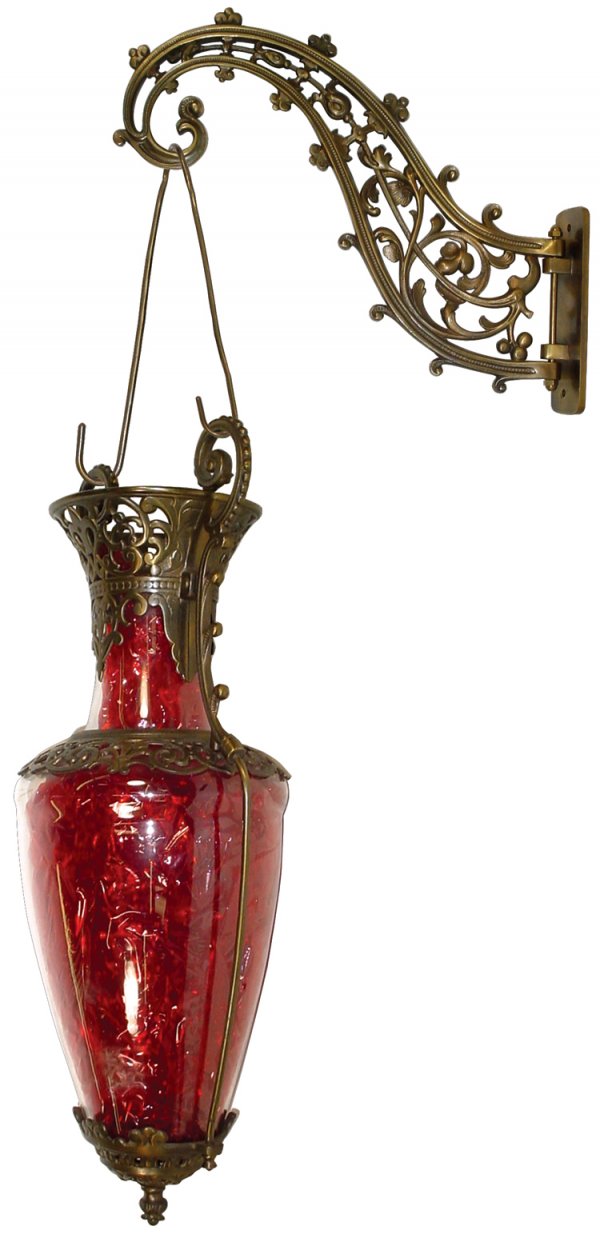
Alchemist Show Globe

The Show Globe is a symbol of the profession. Like the huge red dots on the side of liquor stores in South Carolina the Show Globes are designed for the illiterate to find you and know what you’re offering them. These globes are made of glass and can be of any color that fits your setting (though I’ve only ever seen them with a red color). They will be bound in chains so that they can hang from a staff or pole to show people that you’re open for business. The globe needs to be about the size of a soft ball and open on the top so that you can drop a candle into it to light it up. Due to its size and accouterments I’m placing the weight of this at a 2 pounds.

The case is a velvet lined, wooden box with small doors and straps to keep everything bound in place. Its edges are given extra support with steel fittings and the lock will be of a good quality. It will have similar styled handles with loops to help bind it to backpacks and pack animals. It is designed to be durable and as long as everything is placed properly it should be more than capable of protecting everything and keeping anything from breaking. I’m setting its weight at five pounds and worth every ounce of it for the protection it will provide everything.

Artisan Toolkit Series
Alchemist
Cobbler
Cook
Glassblower
Jeweler
Leatherworker
Mason
Painter
Potter
Smith
Surveyor
Tinker
Weaver
Woodcarver
Final

Artisan Toolkits: Introduction

One of the aspects of Fifth Edition Dungeons & Dragons that I enjoy is the looseness of it. The game doesn't bog you down with knowing all the minutia that make up a thief's toolkit and that's great - but there are times when I actually want to know what goes into a kit because there might be something there that's integral to how it's used or that makes choosing one preferable to another. I mean, what is actually different between a smith's traveling tool set and a mason's? How do I know that one can't be used in substitution with the other? I don't know the answer; but I want to find out. So over the course of the next few days I'm going to be looking into the Artisan Toolkits and making them into a more defined list that should help answer those questions and a few others that arise in the process.

This guide will lay out what is actually contained in each toolkit, how much those contents might actually weigh, and then come to a reasonable price for those items using the gold standard we're all so familiar with. Once I'm done with everything I'll collect it all in a free PDF that will be available at the end.

I'm releasing this series under a Creative Commons Attribution-NonCommercial-ShareAlike 4.0 International License.

Artisan Toolkit Series
Introduction
Cobbler
Cook
Glassblower
Jeweler
Leatherworker
Mason
Painter
Potter
Smith
Surveyor
Tinker
Weaver
Woodcarver
Final

The Trouble with War

 Recently I introduced a war into my home game. Two factions aligned against each other and they began fighting in the capital of Bissel, Th...